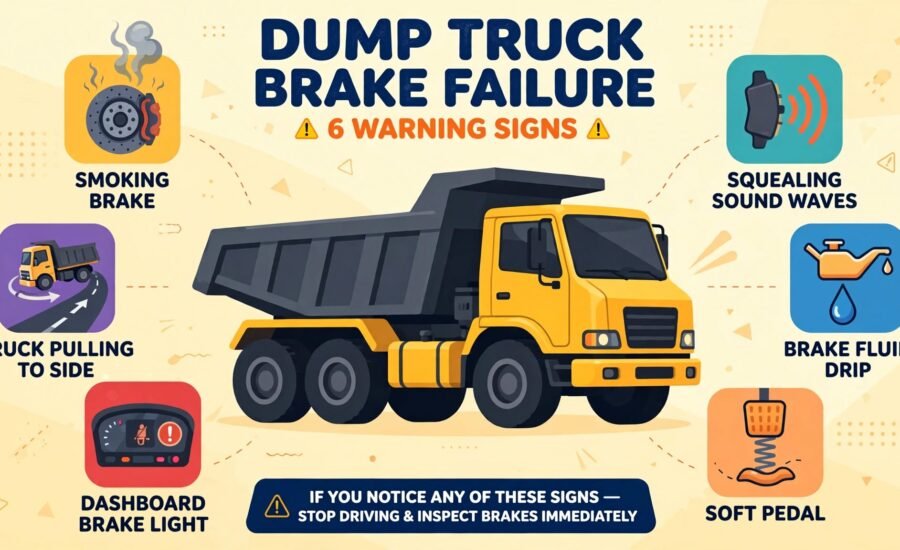
Dump truck brake failure is the nightmare of every operator. A loaded dump truck weighs over 60,000 pounds. Stopping that much weight takes serious braking power. When brakes fail, the truck becomes a runaway missile. People die. Equipment gets destroyed. This guide covers six warning signs that brake failure is coming. Ignoring any of these signs puts lives at risk.
Table of Contents
- 1. Soft or Spongy Brake Pedal
- 2. Brake Pedal Goes to the Floor
- 3. Pulling to One Side When Braking
- 4. Grinding or Squealing Noises
- 5. Brake Fluid Leaks
- 6. Warning Lights on the Dash
- 7. Causes of Dump Truck Brake Failure
- 8. How to Prevent Dump Truck Brake Failure
- 9. What to Do When Brakes Fail
- 10. Final Advice
- 11. Our Trusted Partners (Video)
Soft or Spongy Brake Pedal
A soft brake pedal is the first warning sign of dump truck brake failure. The pedal feels mushy when pressed. It sinks toward the floor. It does not firm up like it should.
Air in the brake lines causes this problem. Air compresses. Brake fluid does not. When air enters the system, the pedal feels spongy. The brakes do not engage fully. Stopping distance increases, increasing the risk of dump truck brake failure.
Bleed the brake system to remove air. This is a simple job for a mechanic. Fresh fluid goes in. Air comes out. The pedal firms up. The brakes work properly again.
A soft pedal also points to a fluid leak. Check the brake lines and fittings. Look for wet spots under the truck. Check the master cylinder reservoir. Low fluid means a leak somewhere. Fix the leak before adding fluid. Adding fluid without fixing the leak just delays the problem and leads to dump truck brake failure.
A failing master cylinder also causes a soft pedal. The internal seals wear out. Fluid bypasses the seals. Pressure drops. The brakes get weak. Replace the master cylinder. Do not try to rebuild it. A new unit is cheap insurance.
Brake Pedal Goes to the Floor
A pedal that sinks all the way to the floor is a severe warning sign of dump truck brake failure. This means the system has lost pressure. The brakes barely work. The truck takes forever to stop.
This happens when a brake line bursts. The fluid escapes. Pressure drops to zero. The pedal goes straight down. The truck keeps rolling. This is the most dangerous brake failure, resulting in complete dump truck brake failure.
A failed master cylinder also causes the pedal to sink. The seals fail completely. No pressure builds. The brakes do not engage. This requires immediate repair.
A brake booster failure can also cause this. The booster helps apply the brakes. When it fails, the pedal gets hard, not soft. But some booster failures cause the pedal to sink. Diagnose the problem properly.
Never drive a truck with a pedal that goes to the floor. Park it. Fix it. Driving is suicide. No load is worth a life.
Pulling to One Side When Braking
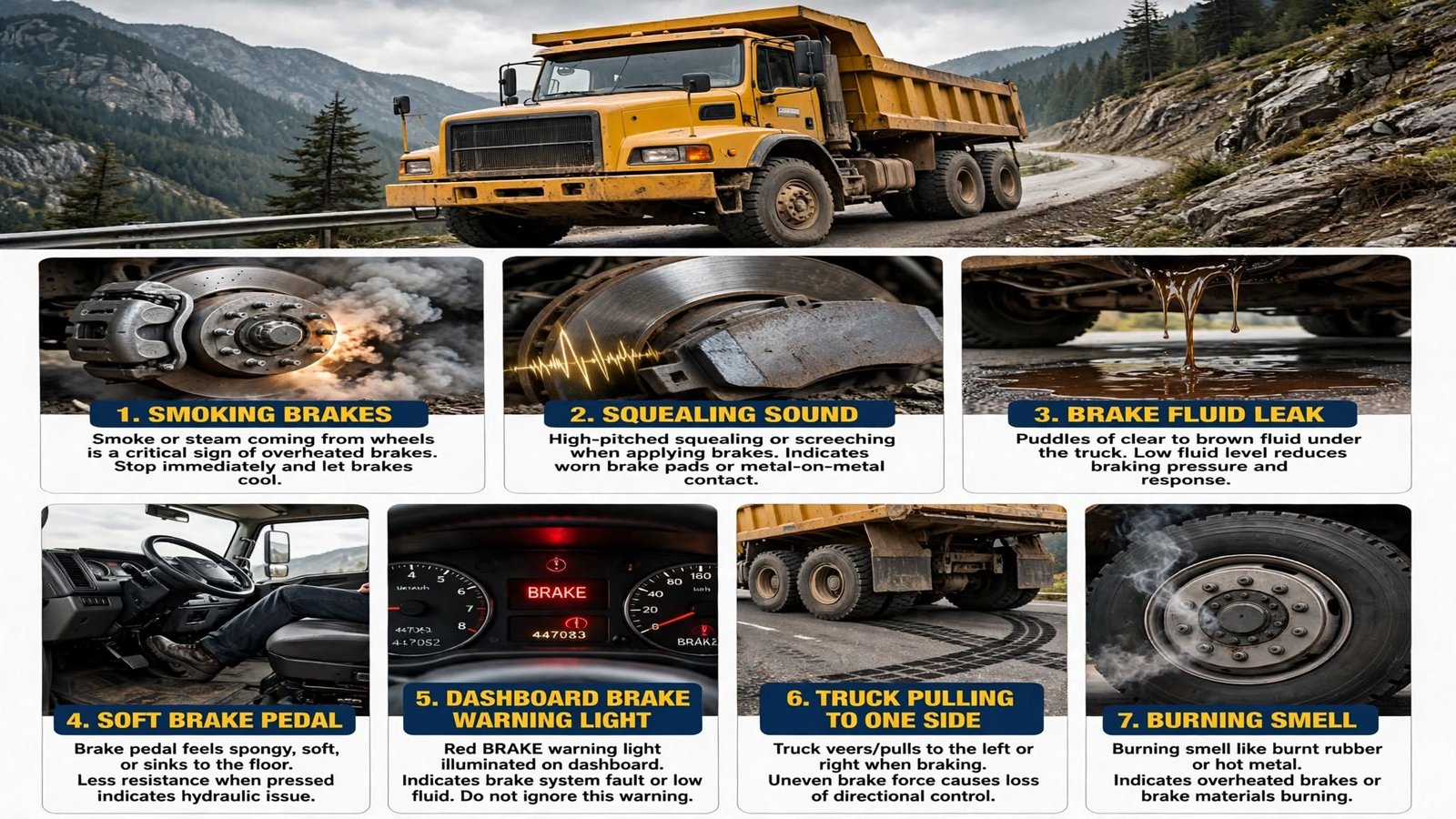
A truck that pulls to one side when braking has a problem. One brake works harder than the other. The truck veers toward the stronger brake. This makes the truck hard to control. It also signals uneven wear that can trigger dump truck brake failure.
A stuck caliper or wheel cylinder causes this. The brake stays applied on one side. The wheel drags. The truck pulls. The brake overheats. The lining wears out fast.
A clogged brake line also causes pulling. Fluid cannot reach one brake. That brake does not engage. The other side does all the work. The truck pulls toward the working brake.
A worn brake lining on one side causes pulling. The side with good lining grabs harder. The truck pulls toward that side. Replace linings in pairs. Never replace just one side. Uneven linings cause uneven braking.
Fix pulling problems immediately. The truck is unsafe. It fails inspection. It causes accidents. Diagnose the cause and repair it before driving again to avoid dump truck brake failure.
Grinding or Squealing Noises
Noises from the brakes are warning signs of dump truck brake failure. Grinding means metal on metal. Squealing means wear indicators touching the rotor. Both mean the brakes need attention now.
Brake pads have wear indicators. These small metal tabs touch the rotor when the pad gets thin. The contact makes a squealing sound. The sound tells the driver to replace the pads. Ignoring the sound wears the rotor. Rotor replacement costs more than pads.
Grinding means the pad material is gone. The metal backing plate rubs the rotor. Metal on metal destroys the rotor. It also reduces stopping power. The truck takes longer to stop. The repair bill goes up fast, and it often results in sudden dump truck brake failure.
Worn wheel bearings also cause noise. A growling sound that changes with speed points to bearings. Worn bearings affect braking. The wheel wobbles. The brake does not apply evenly. Replace worn bearings.
A stuck caliper causes noise too. The brake drags. The rotor overheats. The pads wear unevenly. The truck pulls and makes noise. Free the caliper or replace it.
Brake Fluid Leaks
Brake fluid leaks are serious warning signs of dump truck brake failure. The system is hydraulic. It needs fluid to work. A leak reduces pressure. The brakes get weak. Eventually, the brakes fail completely.
Check for leaks regularly. Look under the truck after parking. Wet spots near the wheels point to wheel cylinder or caliper leaks. Wet spots along the frame point to line leaks. Wet spots under the master cylinder point to a master cylinder leak.
Check the fluid level in the master cylinder. Low fluid means a leak. Topping off the fluid temporarily fixes the symptom. But the leak remains. Find the leak. Fix the leak. Then top off the fluid.
Brake fluid absorbs moisture from the air. Old fluid contains water. Water boils at high temperatures. Boiling water creates air bubbles. Air bubbles cause a soft pedal. Flush the brake fluid every two years. Fresh fluid performs better and lasts longer.
Brake fluid damages paint. It eats through metal. Clean up spills immediately. Wash the area with water. Brake fluid on the frame causes rust. Rust weakens the frame.
Warning Lights on the Dash
Dash warning lights are the final warning sign of dump truck brake failure. The brake warning light comes on for a reason. It means something is wrong. Do not ignore it.
The light comes on when the parking brake is engaged. Release the parking brake. If the light stays on, there is a problem. The light also comes on when fluid is low. Check the reservoir. Add fluid if low. But find the leak.
The light comes on when the ABS system has a fault. The ABS system prevents wheel lock. When it fails, the wheels lock under hard braking. The truck skids. Control is lost. Diagnose the ABS fault. Repair it before driving.
The light comes on when the brake system loses pressure. This is the most serious warning. Stop driving immediately. Tow the truck to a shop. Driving with low pressure is dangerous.
Some trucks have brake pad wear sensors. A separate light comes on when pads need replacement. Replace the pads when the light comes on. Do not wait for grinding noises.
Causes of Dump Truck Brake Failure
Several things cause dump truck brake failure. Knowing the causes helps prevent the problem.
Overloaded trucks stress the brakes. The brakes work harder to stop more weight. Heat builds up. The linings wear faster. The fluid boils. The brakes fail. Respect the weight limits.
Riding the brakes on long descents overheats them. The heat causes brake fade. The pedal feels normal but the brakes do not work. Downshift and use engine braking. Save the brakes for emergencies.
Neglecting maintenance causes failure. Worn pads, old fluid, and damaged lines go unnoticed. Regular inspections catch problems early. Replace worn parts before they fail.
Water in the brake system causes problems. Moisture enters through old fluid. It boils under heat. Air bubbles form. The pedal goes soft. Flush the fluid regularly.
Bad driving habits wear brakes fast. Hard braking, late braking, and speeding all stress the system. Smooth driving extends brake life and prevents dump truck brake failure.
How to Prevent Dump Truck Brake Failure
Prevention is better than repair. Several habits prevent brake failure.
Inspect brakes every week. Look at pad thickness. Check for leaks. Test the pedal feel. Catch problems early.
Replace pads before they wear out. Do not wait for metal on metal. The extra cost of early replacement is small. The cost of rotor replacement is large.
Flush brake fluid every two years. Fresh fluid performs better. It contains no moisture. It resists boiling. The brakes work better and last longer.
Check air pressure in air brake systems. Low pressure reduces braking power. Drain air tanks daily. Replace the air dryer filter on schedule.
Adjust slack adjusters on air brake systems. Proper adjustment keeps the brakes in contact with the drum. Loose adjustment increases stopping distance.
Drive smoothly. Avoid hard braking when possible. Use engine braking on hills. Save the brakes for when they are needed to stop dump truck brake failure.
Train drivers on brake care. Drivers who understand the system take better care of it. They notice problems early. They report issues before they become failures.
What to Do When Brakes Fail
Brake failure happens even with good care. Knowing what to do saves lives during a dump truck brake failure.
Stay calm. Panic makes things worse. Focus on controlling the truck.
Pump the brakes. Sometimes pumping builds pressure. It may restore some braking power.
Downshift. Lower gears slow the truck through engine braking. This works even when the brakes fail.
Use the emergency brake. The emergency brake works independently. It may not stop the truck completely. But it slows the truck.
Look for an escape route. An uphill grade slows the truck. A ditch or soft shoulder also helps. Choose the safest option available.
Sound the horn. Warn other drivers. Give them time to move out of the way.
Final Advice
Dump truck brake failure kills. The warning signs are clear. A soft pedal. A pedal to the floor. Pulling to one side. Grinding noises. Fluid leaks. Warning lights. Ignore these signs and pay the price.
Inspect brakes regularly. Replace worn parts. Flush the fluid. Drive smoothly. Train drivers. These habits prevent failure. They save lives. They save money. They keep the truck on the road.
Brakes are the most important safety system on the truck. Treat them that way. No load is worth a life. No schedule is worth a crash. Check the brakes. Fix the problems to prevent dump truck brake failure. Drive safe.
Our Trusted Partners
We partner with top-tier brands and manufacturers in the heavy equipment industry. Watch the video below to learn more about the machinery!


[…] in the housing. Check the clamp ring for tightness. A loose clamp ring lets the diaphragm slip. The brake fails in the dump truck air brake […]
[…] costs far less than repair. These habits keep the dump truck hydraulic system […]