

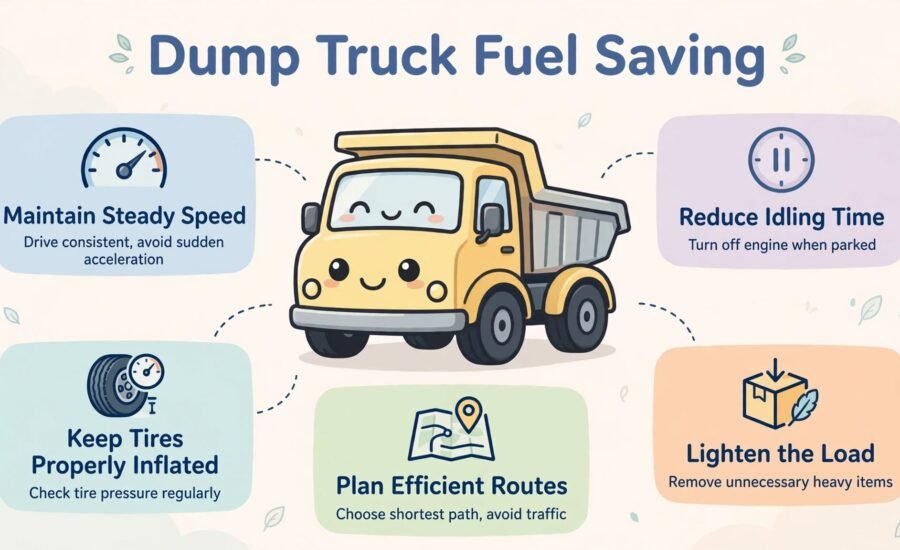
Dump truck fuel saving begins with choices made every single day. Diesel is the largest expense in this line of work, making dump truck fuel saving a priority. One truck can burn through thirty to fifty thousand dollars in fuel over a year without dump truck fuel saving. Trimming that number by ten percent keeps real money in the business through dump truck fuel saving. Five habits make the biggest difference for dump truck fuel saving.
Table of Contents
Stop Idling
A diesel engine burns about a gallon an hour just sitting there. Lunch breaks. Paperwork. Waiting on a loader. Those minutes pile up. Three hours a day becomes seven hundred fifty gallons a year. At four dollars a gallon, that is three thousand dollars gone.
Old habits die hard. Many drivers believe restarting the engine causes more wear than letting it run. That was true decades ago. Starters today handle thousands of cycles without trouble. The fuel burned while parked costs far more than any starter.
Five minutes is the cutoff. Anything longer, kill the engine. Every minute it runs without moving the truck is wasted money. This single change delivers the quickest dump truck fuel saving of all.
Cold mornings need some warm-up time. Heat and defrost demand it. Twenty minutes is plenty. After that, the engine idles for nothing. Park near the scale house. Park near the loader. Less walking, less idling.
Many newer trucks have idle shutdown timers built in. Turn the feature on. Set it to five minutes. The truck handles the rest when the driver forgets.
Idling harms the engine too. Low RPM means low oil pressure. Cylinder walls get less oil. Over thousands of idle hours, wear adds up. Rebuilds come sooner. Fuel waste is only half the cost.
Cab comfort drives a lot of idling. Summer heat. Winter cold. An auxiliary heater or cooling unit solves this. These run on battery power or a small burner. They sip fuel compared to the main engine. The unit pays for itself in one season of dump truck fuel saving.
Some drivers idle because they worry about cold starts. A block heater solves that problem. Plug the truck in overnight. The engine stays warm. Morning starts are easy. No long idle needed.
Fleet owners can track idle time through telematics. Data shows which drivers idle too much. Coaching fixes the habit. Savings show up on the next fuel report, proving the value of dump truck fuel saving.
Watch Tire Pressure
Soft tires drag. The engine pushes harder to move the truck. Harder pushing burns more fuel. Ten PSI low on one tire raises consumption by one to two percent. Six tires low compounds the problem.
Morning checks matter. Dump truck tires run ninety to one hundred twenty PSI depending on load range. The sidewall and the manual list the correct number. Cold readings tell the truth. Heat from driving raises pressure and masks low air. Tire care and fuel saving walk hand in hand for ultimate dump truck fuel saving.
Low pressure ruins tires fast. The sidewall flexes too much. Heat builds inside. The tire fails early. A three hundred dollar tire lost to neglect costs more than any fuel saved.
Overinflation brings its own problems. Hard tires lose grip. They wear down the center. The ride turns rough. Suspension parts take a beating.
A monitoring system pays off. Dash displays show pressure in real time. Drivers catch problems before they grow expensive. The system costs a few hundred dollars. The savings run into thousands through dump truck fuel saving.
Tread design matters too. Deep lug tires bite into mud. They also create rolling resistance on pavement. Rib tires roll easier on highways. Match rubber to the job. A highway truck running lug tires burns extra fuel every mile.
Alignment deserves attention. A bent axle drags tires sideways. The engine fights that drag with fuel. Check alignment every ten thousand miles. Two hundred dollars for alignment beats hundreds in wasted diesel, aiding dump truck fuel saving.
Wheel bearings matter as well. Worn bearings create drag. The engine works harder to turn the wheels. Grease bearings on schedule. Replace worn ones. Free-turning wheels save fuel and promote dump truck fuel saving.
Find the Right Speed
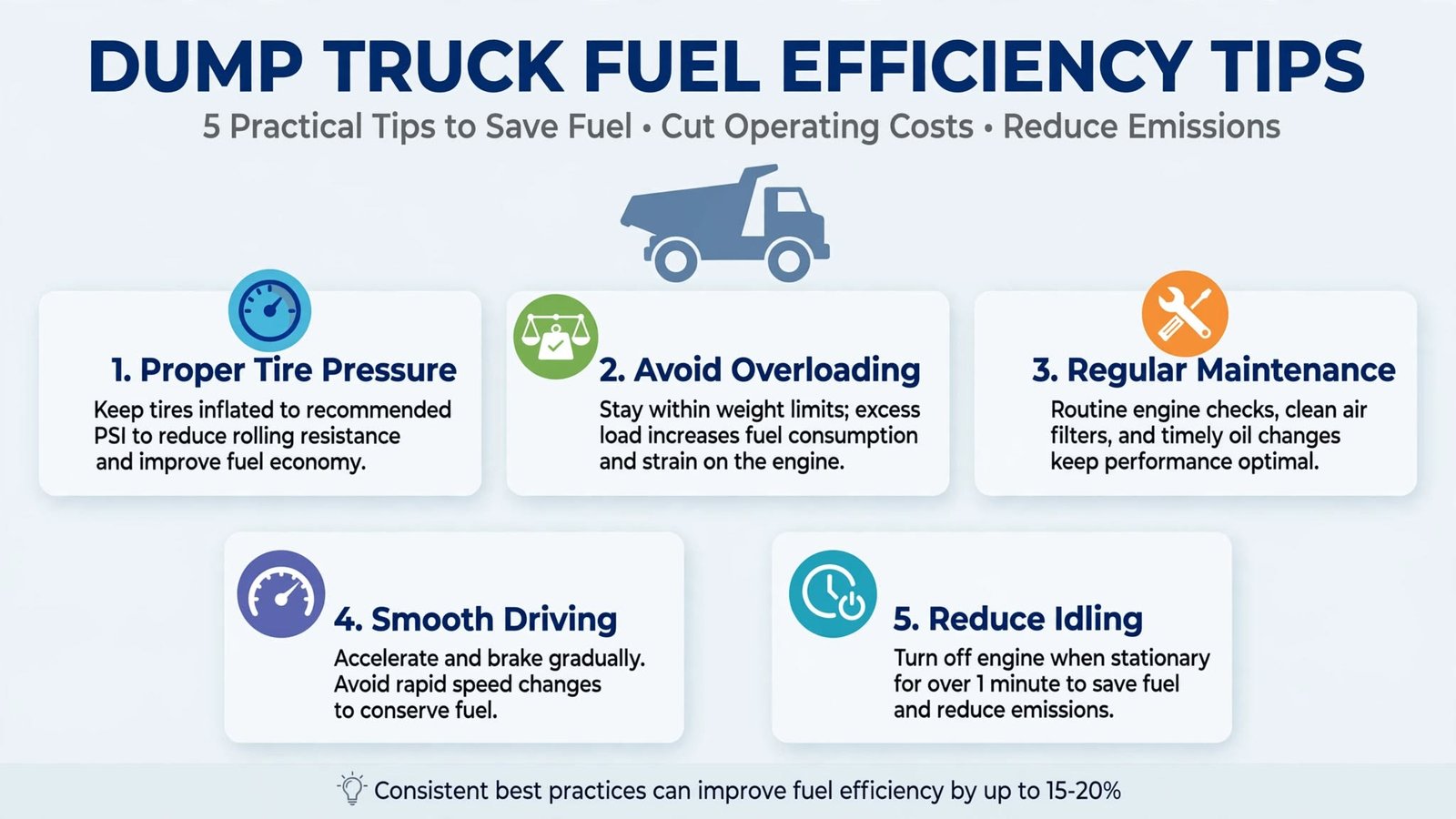
Speed destroys fuel economy. A dump truck pushing air at seventy miles per hour burns far more than one cruising at sixty. Drag increases with the square of speed. Double the speed, quadruple the resistance.
Every truck has a sweet spot. Most dump trucks run best between fifty-five and sixty miles per hour. Above sixty-five, fuel vanishes. Below fifty, deliveries slow and productivity drops. Balance fuel against time.
Cruise control helps on flat ground. The engine holds steady RPM. No surging. No slowing. Steady speed burns less. Hills change the equation. Cruise control pours on throttle to hold speed uphill. Manual control saves fuel on grades.
The boost gauge tells a story. Turbo diesels burn more fuel when boost climbs. High boost means hard work. Ease off the pedal. Let boost fall. The truck keeps rolling. The fuel bill drops.
Jackrabbit starts waste fuel. Hard braking wastes the energy just used to accelerate. Smooth acceleration and gentle stops save fuel. Dump truck fuel saving comes down to smooth driving.
Traffic affects economy more than anything. Stop and go burns fuel with every start. Plan routes around congestion. Leave early. A longer route that keeps moving beats a short one stuck in traffic.
Idle time in traffic is unavoidable sometimes. But route planning cuts most of it. Check traffic reports before leaving. Adjust the route when problems appear. Small changes add up over a week.
Tire pressure affects speed efficiency too. Soft tires at high speed build heat fast. Heat ruins tires and wastes fuel. Keep pressure correct for highway runs to maximize dump truck fuel saving.
Reduce Weight and Drag
Every pound costs fuel to move. Dump trucks haul heavy loads by design. Empty weight still matters. Hauling unnecessary gear burns fuel for no reason.
Clean out the cab and toolboxes. Extra tools, spare parts, junk. A few hundred pounds sounds small. Over a hundred thousand miles, it adds up. Keep only what the job needs.
Trailer skirts cut drag. These panels block airflow under the trailer. Less drag means less fuel burned. Savings run two to three percent. Hundreds of gallons over a year.
Keep the truck clean. Mud and dirt add weight. They also create drag. A clean truck slips through air easier. Wash regularly. Focus on the underside and wheels.
Tarp loads when required. An uncovered load creates drag and spills material. Tarping is law in many places. It also helps fuel economy and dump truck fuel saving.
Cab deflectors smooth airflow between cab and trailer. That gap catches air. A deflector fixes the problem. The truck cuts through air with less effort. Small savings per mile. Large savings per year.
Mud flaps keep debris off the truck. But oversized flaps add drag. Use the right size for the truck. Balance protection against fuel economy.
Mirrors create drag too. Large mirror arms catch air. Keep mirrors adjusted properly. Fold them when not needed on long runs.
Maintain Engine and Drivetrain
A neglected engine burns more fuel. Dirty air filters choke airflow. The engine labors to breathe. More fuel burns to make the same power. Change filters on schedule.
Clogged fuel filters restrict flow. Power drops. Drivers press harder on the throttle. More fuel burns. Change fuel filters at every oil change. Clean fuel burns better.
Worn injectors spray poorly. The pattern breaks apart. Fuel does not burn completely. Power falls and fuel burns rich. Test injectors at recommended intervals. Replace worn ones. The fuel savings cover the repair.
Drivetrain drag costs fuel. Worn U-joints and bearings fight rotation. The engine overcomes that drag with diesel. Grease the driveline on schedule. Replace worn parts. A free-spinning drivetrain delivers better economy and dump truck fuel saving.
Cooling system health affects fuel. An engine running cold burns more. A stuck thermostat keeps temperatures low. The computer adds fuel to compensate. Replace bad thermostats.
Exhaust leaks hurt economy. A leaking manifold or turbo drops boost pressure. Power falls. The driver presses harder. Fix exhaust leaks. Full power returns on less fuel.
Transmission health matters too. Worn clutches slip. Slipping wastes power. The engine burns more fuel to do the same work. Replace worn clutches. Adjust linkages properly.
Differential fluid affects economy. Old, thick fluid creates drag. Change differential fluid on schedule. Fresh fluid keeps gears turning freely.
More Habits That Help
Plan routes. Stop and go burns fuel. Idling in jams burns fuel. Highways beat city streets. Combine trips to cut empty miles.
Cut idle time at scales. Paperwork ready before arrival. Load weight known. Every minute saved is fuel saved.
Use the right gear. Lugging in too high a gear burns fuel. Revving in too low a gear burns fuel. Keep the engine in its efficient range. Most diesels run best at twelve to fifteen hundred RPM.
Warm up wisely. Cold engines burn more. Long warm-ups waste fuel. Start the truck. Let oil pressure build. Drive gently. The engine warms faster under light load.
Check for leaks. Small fuel leaks waste fuel and risk fire. Inspect lines and fittings regularly. Fix problems immediately.
Track purchases. Record every fill-up. Track miles per gallon. Sudden drops signal trouble. Catch issues early.
Use additives wisely. Some improve economy. Others do nothing. Research first. A good injector cleaner every few months keeps the system clean. Clean injectors deliver better mileage for dump truck fuel saving.
Fuel quality matters. Dirty fuel clogs filters and damages injectors. Buy from busy stations with fresh fuel. Avoid stations with old, stale diesel. Fresh fuel burns cleaner and delivers more power.
The Math Behind Dump Truck Fuel Saving
A dump truck burns thirty to fifty thousand dollars in fuel annually. Ten percent savings keeps three to five thousand in the bank. Fifteen percent savings tops seven thousand.
No expensive equipment required. Just habits. Shut the engine down. Check tire pressure. Drive slower. Cut weight and drag. Maintain the engine. Each habit chips away at the bill.
Stack them together and fuel costs fall. The truck stays competitive. Margins improve. Dump truck fuel saving is not complex. It is consistent.
A fleet of five trucks saving ten percent each adds up to fifteen to twenty-five thousand dollars a year. That money funds new equipment, pays down debt, or boosts profit. The habits scale across the fleet.
Final Advice
Fuel is the biggest expense in this business. Every gallon saved helps the bottom line. Five habits deliver real results. Stop idling. Watch tire pressure. Drive at the right speed. Cut weight and drag. Maintain the engine.
These habits take effort. Practice makes them routine. Drivers who adopt them save thousands yearly. Owners who train their drivers see savings across the fleet.
Start today. Pick one habit. Make it part of the daily routine. Add another next week. The fuel bill drops. Profit rises. Dump truck fuel saving works when the habits stick.
Our Trusted Partners
We partner with top-tier brands and manufacturers in the heavy equipment industry. Watch the video below to learn more about the machinery!



[…] driving habits wear brakes fast. Hard braking, late braking, and speeding all stress the system. Smooth driving […]
[…] thermostat can stick open too. The engine runs cold. Fuel mileage drops. The engine wears faster. The heater blows […]